
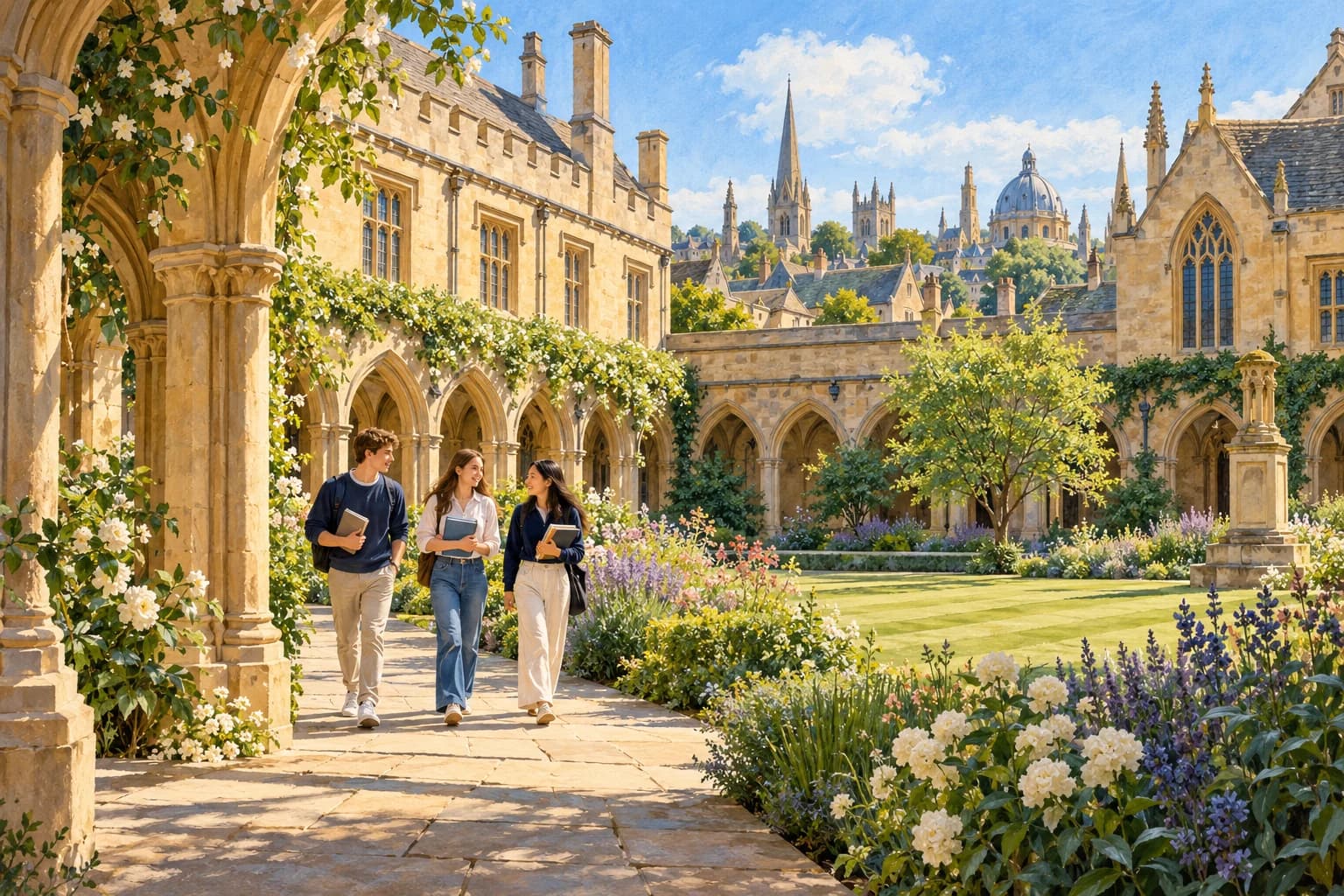
Start with the student’s interests and learning style. These ten Oxford options range from premium college summers and small-group study to career projects, English learning and younger residential camps.
Oxford offers several very different kinds of summer school. Some students want close academic discussion, some want to test a future career, and others will gain most from a well-supported first summer away from home. The best shortlist begins with those differences.
Our leading starting points are Academy Royale International for a premium college experience, Atlas for discussion and self-directed learning, Immerse for a focused academic project, SBC for younger residential students, and Oxbridge Academic Programs for traditional college life and distinctive subjects. The other choices below meet different needs just as clearly.
The individual assessments explain who each provider suits; this is a shortlist, not a measured league table. All have Oxford provision in the current catalogue. For the detailed calendar and fees, use our full Oxford summer school comparison.
The Oxford shortlist at a glance
| Provider | School-age options discussed here | Best fit |
|---|---|---|
| Academy Royale International | Academic programmes for 12–15 and 16–18 | A premium college summer combining specialist teaching and a substantial wider experience. |
| Atlas Summer Courses | Oxford teenage courses for 13–15 and 16–17 | Students who enjoy discussion, questions and some independent direction. |
| Immerse Education | Oxford Academic Insights for 13–15 and 16–18 | Exploring a possible degree subject through focused study and a personal project. |
| Summer Boarding Courses | Ages 8–17 across its Oxford programmes | Younger students, first residential stays and English development through activities or subjects. |
| Oxbridge Academic Programs | Grade-based Oxford Experience and Oxford Tradition programmes | Traditional college life and an unusually varied academic course list. |
| Oxbridge Scholars | Oxford programmes for 14–17 | A focused pre-university taster in business, law or leadership. |
| Oxbridge Summer Scholars | Junior 14–15 and senior 16–19 | Interdisciplinary interests developed through tutorials and an individual project. |
| Oxford Scholastica Academy | Courses for 12–14 and 15–18 | A clear subject interest and a central Oxford residential base. |
| Spark To Connect | Teen LABs for 15–18 | Practical career exploration with projects and presentations. |
| St Clare’s Oxford | Junior and teenage courses across 9–17, by course | English learning in an established school environment. |
These age ranges belong to particular programmes. They do not mean every subject is available to every student within the provider’s overall range.
1 Academy Royale International
Our premium pick for a student who wants the whole college experience.
Academy Royale International, formerly Oxford Royale Academy, brings together subject study, specialist teaching, college living and an ambitious programme beyond lessons. Its academic faculty and guest-speaker programme are part of the appeal for students who enjoy encountering ideas through different voices.
We particularly like Academy Royale International for a student who wants both academic stimulation and the sense of occasion of an Oxford summer. The quality of the wider residential experience matters here: friendships, organised events and cultural activity are a substantial part of what the family is buying.
It is a less natural fit for someone seeking a quiet revision course. Choose it when the student is enthusiastic about participating in the academic and social sides of the fortnight. Past headline speakers give a sense of the programme’s ambition, rather than promising the same names for 2027.
Explore Academy Royale International
2 Atlas Summer Courses
Best for a curious student who wants room to think aloud.
Atlas, formerly Oxford Summer Courses, is especially appealing when the student enjoys questioning an explanation and developing their own interests. Small-group seminars, tutorials and feedback give that curiosity space to develop.
We would shortlist it for a teenager who wants to contribute rather than simply listen. A student who expects every task to come with a tightly prescribed answer may need time to adapt to the self-direction.
The Oxford teenage programmes are distinct from Atlas’s younger provision at Harrow. Its adult courses also have their own entry requirements. The attraction is the teaching format and college setting, not a single course that suits every age.
3 Immerse Education
Best for turning a subject interest into an academic project.
Immerse’s Oxford Academic Insights route suits a student who wants to try studying a subject beyond the school syllabus. A personal project gives the fortnight something to work towards and creates a useful reason to seek feedback.
It is a strong starting point for students considering subjects such as medicine, law or computer science. We would favour it when the teenager is already interested enough to welcome sustained work in one area.
Immerse offers academic and career-focused streams across its wider international range. Oxford’s Academic Insights programme should be chosen for its academic format; a Career Insights programme elsewhere offers a different experience.
4 Summer Boarding Courses
Best for younger students and a well-supported residential summer.
SBC is particularly strong when confidence, friendships and settling into a residential community matter alongside learning. Its Oxford choices progress from Camp Dragon for ages 8–12 to Camp Headington for 10–14, Headington Oxford for 12–16 and Oxford College for 15–17.
A younger child drawn to a broad exploratory camp may suit Dragon; one excited by science and outdoor discovery may prefer Camp Headington. Older students can move towards subject-themed learning or the academic Future Scholars routes.
This is a useful progression, but the programmes remain distinct. We would choose the age-appropriate format before deciding that a child should have a college experience. Our SBC review explains the differences in more detail.
Explore Summer Boarding Courses
5 Oxbridge Academic Programs
Best for traditional college life and subjects that spark a particular curiosity.
Oxbridge offers a well-established college summer with an unusually varied academic menu. Its Oxford Tradition programme, based at Pembroke, includes choices such as Archaeology, Criminology and Neuropsychology alongside more familiar subjects.
This is a provider we would shortlist when the student is excited by a particular course. An unusual subject that they want to investigate can be a better reason to book than a broad promise of university preparation.
Oxford Experience and Oxford Tradition serve different school grades and have different calendars. Use the programme’s grade eligibility rather than treating the provider’s overall age range as permission to join every course. Cambridge has its own subject list.
Explore Oxbridge Academic Programs
6 Oxbridge Scholars
Best for a focused pre-university taster.
Oxbridge Scholars offers Oxford routes in Business, Finance and Investment; Law, Politics and International Relations; and Global Leadership for ages 14–17. These subject families make it a useful choice for students starting to connect a school interest with possible future study.
We would shortlist it for a teenager who wants a clear theme without committing to a very narrow specialism. The leadership programme at St Hilda’s is particularly relevant when communication and collaboration are the main interests.
It is a separate provider from Oxbridge Summer Scholars. The similar names should not obscure their different course structures.
7 Oxbridge Summer Scholars
Best for interests that cross subject boundaries.
Oxbridge Summer Scholars brings related subjects together in broader academic streams and includes an individual research project. That can suit a student who is interested in the connections between medicine and biology, for example, or business and economics.
The mix of lectures, seminars and tutorials gives students different ways to engage. We would favour it for a teenager who wants to investigate a question of their own while keeping a wider intellectual range.
Its junior and senior programmes serve different age groups. Choose the stream and age group together, rather than treating the programme as a general collection of university lectures.
Explore Oxbridge Summer Scholars
8 Oxford Scholastica Academy
Best for a student with a clear subject interest who wants a structured Oxford introduction.
Scholastica offers a well-developed range of subject courses, with separate choices for younger and older teenagers. It is a good option for someone who wants a defined academic focus and an organised residential experience around it.
We particularly like it for a student considering what to study next. Trying the subject through discussion and practical challenges can be more informative than choosing a course solely for its title.
The accommodation deserves a precise description. Scholastica lists college campuses alongside separate college residential buildings and annexes. These provide an appealing Oxford base, but a room in an annexe and a room within a main college campus are different versions of the college experience.
Explore Oxford Scholastica Academy
9 Spark To Connect
Best for a teenager who wants to explore careers by making and presenting something.
Spark’s Global Teen LABs put practical application at the centre of the summer. The five areas cover leadership, biotechnology and future medicine, entrepreneurship, AI and innovation, and finance and investing.
We would shortlist Spark for a student who becomes more interested when an idea connects with a real problem or a possible career. Project work and presentations give the experience a clear purpose beyond attending classes.
The residential setting is New College, an especially attractive part of its appeal. This is a strong combination for a teenager who wants both a historic Oxford setting and work that looks towards the future.
Explore Spark Global Teen LABs
10 St Clare’s Oxford
Best for making English improvement the main purpose of the summer.
St Clare’s is an established Oxford school with dedicated English and summer provision. Its North Oxford setting is especially appealing for teenagers who want a school community and language learning at the centre of the day.
We would start here when the family wants the student to become more confident using English, rather than hoping that an academic subject course will provide language tuition indirectly. Teenage subject and academic options allow a more specific shortlist when the student’s English is ready for them.
Junior programmes use a separate school campus, so the school’s Banbury Road address should not be read as the location of every age group. Match the course and age to the actual campus.
The adult alternative
For an adult seeking academic study, our first college-run option to consider is Lady Margaret Hall. The programme is run by the college itself and offers a different setting from an independent teenage summer school. St Clare’s also has adult English options.
How to turn ten options into a useful shortlist
Choose two or three providers around the student’s strongest priority. For a premium college summer, start with Academy Royale International. For close discussion, compare Atlas. For an academic project, look at Immerse. For younger children, begin with the relevant SBC programme. For a traditional college summer with distinctive subjects, consider Oxbridge Academic Programs. Then compare the more specialist options where they match the student’s interests.
Then compare the actual subject, dates, residential package and full cost. Independent programmes using college facilities are not university admission, and a certificate does not make every course academically equivalent.
Use our Oxford comparison with actual 2027 sessions and fees for that next step. If the student is still deciding between destinations, our Oxford or Cambridge guide will help.