
Compare Oxford summer schools for 2027 by age, teaching style, dates, fees and accommodation, with practical advice to help you choose the right programme.
The best Oxford summer school for your child is the one that matches their interests, stage of learning and readiness to live away from home. A subject course taught through seminars, an English language summer school and a practical project programme can offer very different experiences, even when they take place in the same city.
Our strongest recommendations reflect different priorities. Academy Royale International stands out for a premium college experience; Atlas for independent, tutorial-style learning; SBC for younger children; and Spark for practical career exploration. St Clare’s is our English-language specialist, while Lady Margaret Hall is our top academic pick for eligible adult learners.
Below, we explain what each provider does particularly well, who will get the most from it, and how its Oxford experience differs. The comparison focuses on Oxford programmes for summer 2027, with clearly identified alternatives where a provider’s wider offering is relevant.
We may receive a referral fee for bookings made through our site. Our recommendations are editorial assessments based on teaching approach, programme design, setting and the student each option serves best.
Our recommendations by student goal
| If your priority is | Start with |
|---|---|
| A premium college experience with accomplished tutors and guest speakers | Academy Royale International |
| Small classes, tutorials and independent learning | Atlas Summer Courses |
| A wide subject choice, including technology | Immerse Education |
| A first residential summer for a younger child | Summer Boarding Courses |
| University preparation and exploring future study | Oxbridge Scholars |
| Connecting related subjects through intensive academic study | Oxbridge Summer Scholars |
| An established academic programme in central Oxford | Oxford Scholastica Academy |
| Practical career exploration and project work | Spark Global Teen LABs |
| A traditional college summer with distinctive subjects | Oxbridge Academic Programs |
| Specialist English teaching | St Clare’s |
| A college-run academic programme for eligible adults | Lady Margaret Hall |
Oxford summer school dates and fees for 2027
These are the 2027 sessions for the Oxford programmes below. Fees are per two-week residential session unless a different duration or package is stated. Subject and age-group schedules vary within each provider’s calendar. Oxbridge Academic Programs’ early-booking fees have a deadline; standard fees are shown alongside them.
| Oxford programme | Ages | 2027 session dates | Published fee for that option |
|---|---|---|---|
| Academy Royale International | 12–18 | 4–17 July; 18–31 July; August session starts 1 August | £7,995 residential |
| Atlas Summer Courses | 13–24, by course | 27 June–10 July; 4–17 July; 11–24 July; 18–31 July (Oxford catalogue sessions) | £6,995 Plus residential tier |
| Immerse Academic Insights | 13–15 or 16–18 | 4–17 July; 18–31 July; 1–14 August (subjects vary by session) | £7,495 Classic residential |
| SBC Oxford College | 15–17 | 5–19 July; 19 July–2 August | £6,295 residential |
| Oxbridge Scholars Pre-University Taster | 14–17 | 4–17 July; 18–31 July | £5,988 standard fee |
| Oxbridge Summer Scholars | 14–19, by course | 4–17 July; 18–31 July; 1–14 August | £6,950 residential |
| Oxford Scholastica Academy | 12–18, by course | 4–17 July; 18–31 July; 1–14 August | £7,495 residential |
| Spark Global Teen LABs | 15–18 | 2–15 July: Leadership, BioTech, Entrepreneurship; 16–29 July: AI & Innovation, Finance & Investing | £7,995 residential |
| SBC Headington Oxford | 12–16 | 12–26 July; 26 July–9 August | £4,295 English / £4,795 other subject courses, residential |
| St Clare’s Juniors | 9–15 | Active English, two weeks: starts 11 July, 25 July or 8 August | £3,870 residential |
| St Clare’s Teenagers | 15–17 | Interactive English, two weeks: starts 20 June, 27 June, 4 July, 18 July, 1 August or 8 August | £2,640 residential |
| SBC Camp Dragon Oxford | 8–12 | 19 July–2 August; 2–16 August | £4,095 residential |
| Oxford Tradition | Grades 10–12 | 2–15 July; 17–30 July; combined 2–30 July | US$7,850 short / US$12,995 combined through 31 Dec 2026; US$8,495 / US$13,595 from 1 Jan 2027 |
| Oxford Experience | Grades 8–9 | 5–31 July | US$12,995 through 31 Dec 2026; US$13,195 from 1 Jan 2027 |
St Clare’s publishes exact start dates and stay lengths for the named English courses. Atlas dates are the Oxford sessions in our current catalogue. ARI’s August session starts on 1 August. Longer stays are also available: SBC Oxford College, 5 July–2 August; SBC Headington, 12 July–9 August; Oxford Scholastica, 4–31 July or 18 July–14 August. These longer stays have separate fees. Age bands apply to particular courses and cohorts; Oxbridge Academic Programs publishes eligibility by school grade.
How we compare Oxford summer schools
We compare the organiser, Oxford location, eligible age group, dates, teaching approach and fee basis using our catalogue alongside the providers’ own websites. Fee links in the table point to provider sources. Our suggestions about who a programme may suit are editorial judgements based on those features.
The programmes here offer different kinds of Oxford summer. We distinguish full college living, central college-annexe accommodation and school campuses, and compare academic exploration, career preparation and English learning on their own merits.
Our role is to turn those differences into a useful shortlist. The profiles below explain the experience behind the dates and fees; our advisory team can then help match the right programme to a student’s interests, age and budget.
Academic Oxford summer programmes compared
Academy Royale International
Our pick for a premium Oxford college experience. Academy Royale International, formerly Oxford Royale Academy, brings together college living, a broad academic programme and an established guest-speaker tradition. Its Oxford venues include Balliol, St Peter’s and St Catherine’s, giving students the experience of living and studying within working university colleges.
The calibre of its academic contributors is a particular strength: its faculty includes experienced university researchers, subject specialists and professionals, while past headline speakers include Brian Cox and Helen Sharman. British Accreditation Council accreditation adds substance to its emphasis on quality. We recommend ARI to families who want strong teaching alongside an ambitious cultural and social programme, with the college setting an integral part of the summer.
Explore Academy Royale International’s programme
Atlas Summer Courses
Our pick for small classes and independent, tutorial-style learning. Atlas is particularly strong for students who enjoy forming their own ideas and discussing them closely with a tutor. Older students combine small seminars with independent preparation and tutorials; the provider’s tutorial model for ages 16+ brings two students together with one tutor.
This is a good match for a motivated learner who wants room to follow an academic interest, develop an argument and respond to detailed feedback. Experienced tutors and Oxford college accommodation complete the experience. For students aged 13–15, the emphasis is on small-group seminars and guided independent work. Atlas is especially appealing when the way a student learns matters as much as the subject itself.
Immerse Education
A strong choice for subject variety, small classes and technology interests. Immerse’s Oxford Academic Insights programmes offer focused study for ages 13–15 and 16–18, with options including AI, computer science, engineering, medicine and humanities. Small classes and a substantial personal project make it a good option for students who want to explore a subject beyond the school syllabus.
We particularly like Immerse for students drawn to technology and emerging fields, and for families comparing Oxford with other international destinations. Its wider range also includes Career Insights in London, New York and Tokyo, combining industry visits with practical career exploration. In Oxford, Academic Insights is the route to a college-based academic experience; the distinction makes it easy to choose between deeper subject study and a more directly career-focused summer elsewhere.
Explore Immerse Academic Insights
Summer Boarding Courses Oxford College
A good bridge from school to university-style study. SBC’s particular strength is its progression from younger children’s camps to more demanding teenage programmes. Oxford College is its option for ages 15–17: a structured introduction to university learning, with Humanities and Sciences pathways, 25 academic hours a week and classes of up to 15.
We recommend it to teenagers who are ready to explore a degree direction but would still benefit from a clear routine and a well-organised residential programme. The pathways let students experience related disciplines together, making this a useful choice for someone deciding between, for example, different sciences rather than committing immediately to one narrow subject.
Oxbridge Scholars Pre-University Taster
A strong choice for university preparation and finding a future direction. Oxbridge Scholars is designed around the transition from school interests to university study and possible careers. Its Oxford programme at St Hilda’s combines academic exploration, practical projects and guidance from academics, mentors and professionals for students aged 14–17.
We recommend it to students asking what a subject could lead to, and how they might approach the next stage of their education. The blend of workshops, career insight and college life gives that decision a practical context. It is particularly useful for a teenager who wants an introduction to university expectations while still exploring their options.
Explore the Oxbridge Scholars taster programme
Oxbridge Summer Scholars
Our recommendation for exploring connected subjects through an academically intensive programme. Oxbridge Summer Scholars combines attractive Oxford college settings with interdisciplinary streams. A student interested in medicine, for example, can explore related areas of biology, chemistry and psychology rather than spending the whole fortnight on one narrow topic.
Its senior programme combines lectures, seminars and tutorials, with tutorial groups limited to six, plus an individual research-project emphasis. That gives curious students several ways to test ideas and develop their thinking. We see it as a particularly good fit for students who enjoy making connections between subjects and want a demanding academic summer. Separate junior and senior programmes serve ages 14–15 and 16–19.
Explore Oxbridge Summer Scholars
Oxford Scholastica Academy
A strong all-round academic choice with a well-developed Oxford programme. Oxford Scholastica combines a broad spread of subjects with practical challenges, skills sessions and an established programme refined since its founding in 2013. It is a good choice for students who want purposeful academic study within a lively, supportive summer community.
Its accommodation has a different character from a programme centred entirely on a main college quadrangle. Central college annexes, including St Peter’s and Corpus Christi buildings, offer convenient bases close to the city’s landmarks and social life. We particularly like Scholastica for families who value a mature programme and central Oxford location, and are happy with the annexe experience rather than making a traditional college campus their deciding factor.
Explore Oxford Scholastica Academy
Spark Global Teen LABs
Our pick for practical career exploration. Spark’s specialist LABs are a strong choice for students aged 15–18 who want to apply ideas, build a project and present their work. Leadership, biotechnology and medicine, entrepreneurship, AI, and finance provide routes into several fields that ambitious teenagers are considering for the future.
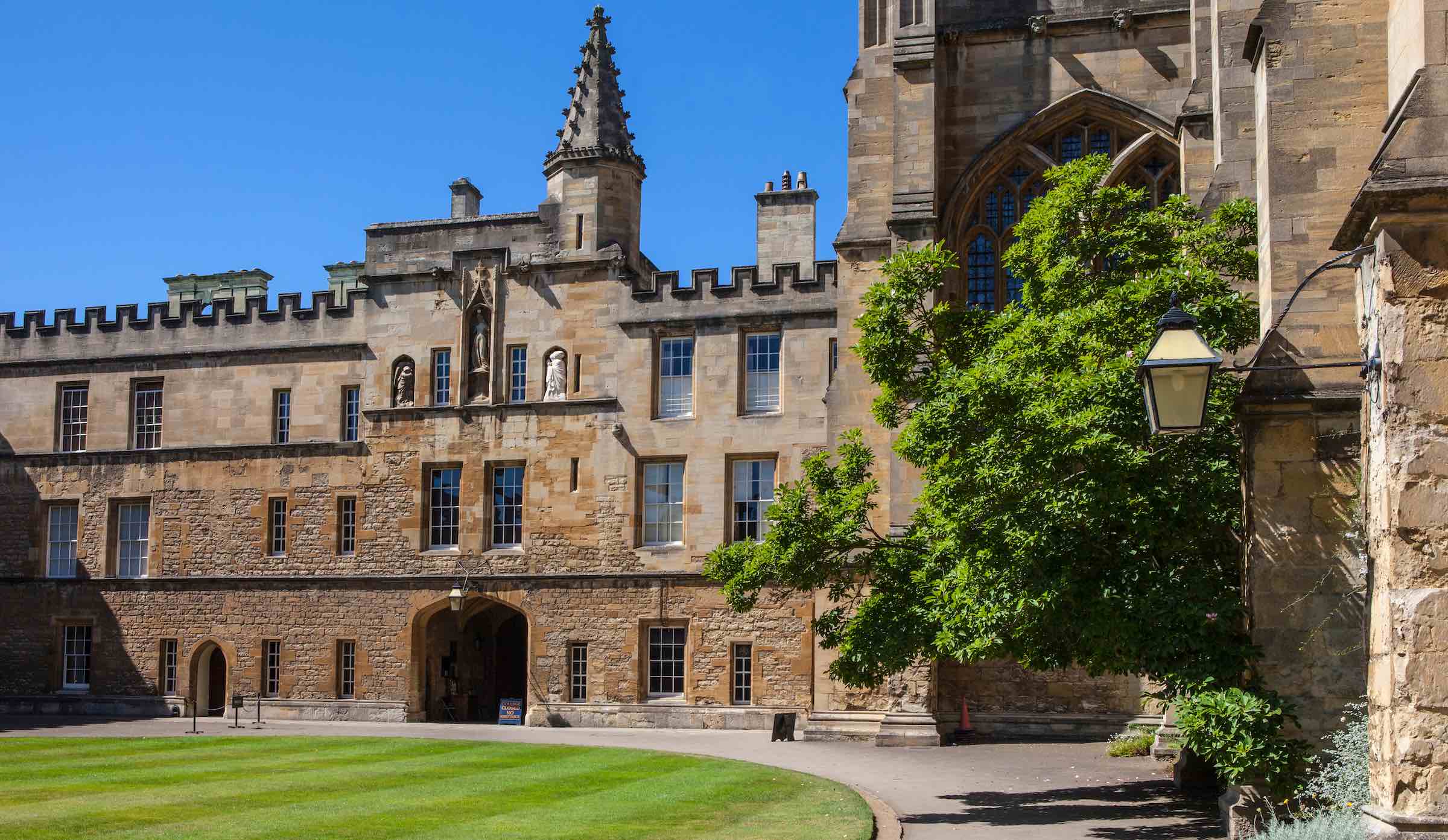
The programme’s appeal is the connection between learning and doing: students work towards a venture, pitch or strategic challenge and receive professional feedback. New College adds a particularly beautiful setting, with historic quadrangles and cloisters; despite its name, it was founded in 1379 and is one of Oxford’s oldest colleges. We recommend Spark to students who want a sense of where their interests could take them, alongside the pleasure of living in an exceptional Oxford college.
Explore Spark Global Teen LABs
Oxbridge Academic Programs
A standout option for a traditional Oxford summer school with unusual subject choices. Oxbridge Academic Programs began in Oxford in 1986 and has a long-established approach built around specialist teaching, intellectual curiosity and college life. Oxford Tradition takes place at Pembroke; Oxford Experience, for the younger grades 8–9 group, is based at Keble.
We particularly recommend it for students whose interests extend beyond the usual medicine, law and business shortlist. Oxford Tradition’s options include archaeology, classics, immunology and neuropsychology, alongside creative writing and theatre. Its longer stays allow more time to settle into the city and an academic community. Aerospace Engineering is another appealing option in the provider’s wider range, offered in Cambridge. The Oxford programmes are for school students, with different routes for grades 8–9 and 10–12.
Explore Oxford Tradition or explore Oxford Experience.
English programmes and options for younger students
Summer Boarding Courses Headington Oxford
One of our strongest recommendations for younger teenagers. SBC’s school-campus programmes are particularly good for children who will enjoy a busy, sociable summer with a clear daily rhythm. Headington Oxford serves ages 12–16, combining English development with subjects such as science, medicine, entrepreneurship, leadership and art.
The school setting brings teaching, residential life, sport and activities into one summer-school community. With 15 teaching hours a week, the balance leaves room for language practice, friendships and exploring new interests. We recommend Headington to families who want a first taste of academic summer school in a structured boarding-school environment. English Adventures is the language-focused route; the subject courses develop English through a particular interest.
Explore Headington Oxford Summer School
St Clare’s Juniors
A strong choice for younger students building confidence in English. St Clare’s brings the experience of an established language school to its junior courses for ages 9–15. Active English develops language through lessons, activities and excursions, while STEM and leadership options give students a theme around which to practise and communicate.
We recommend it when English improvement is the main purpose of the trip and the student would enjoy using the language throughout a residential summer. The 17 weekly teaching hours sit within a wider programme of activities and social time. The junior programme is distinct from St Clare’s Banbury Road base for older learners, with age-appropriate boarding arrangements.
St Clare’s Teenagers
Our specialist recommendation for English learning in Oxford. St Clare’s is a long-established school whose English-language provision is accredited by the British Council. Its teenage programme is based around Banbury Road in leafy north Oxford, close to Summertown’s shops and cafés—a charming neighbourhood setting with a different feel from the city-centre college programmes.
For ages 15–17, the mix of English courses, academic themes and flexible stay lengths makes it particularly useful for students who want a summer shaped around language progress. We recommend it to families who value a specialist school environment and everyday opportunities to use English. Interactive English is the natural starting point; academic and exam-focused options suit students with more specific goals.
Explore St Clare’s teenage programme
Camp Dragon Oxford
Our pick for younger children taking their first steps into residential summer school. Camp Dragon at the Dragon School serves ages 8–12, combining English with play, practical projects and discovery. Its preparatory-school setting is well suited to children who learn through doing and benefit from an environment designed around their age.
We recommend it for a first summer away when building confidence, making friends and enjoying the daily experience matter as much as classroom progress. It is a clear example of SBC’s strength with younger children: a school campus, a structured activity programme and a playful approach to learning.
How to choose the right programme for your child
Decide what a successful summer would look like
Ask the student what they want to get out of the experience. “Find out whether I enjoy law” is a more useful starting point than “go to the most prestigious summer school”.
For deeper academic exploration, Atlas and OSS offer different forms of discussion-led learning: Atlas places more responsibility on older students’ independent preparation, while OSS brings several related subjects together within a stream. For English development, St Clare’s provides specialist language teaching; SBC combines language practice with a broader camp or subject experience.
For students motivated by a future career, Spark makes practical work and presentation central to the experience. Oxbridge Scholars puts the emphasis on university preparation and exploring future directions. These are useful distinctions when a student enjoys a subject at school but is unsure what studying or working in it might involve.
Match the teaching style to the student
A seminar asks students to discuss ideas with a group. A tutorial usually involves closer discussion of prepared work, although organisers use the term differently. A workshop centres on a task or skill. A lecture can introduce specialist knowledge but may offer less opportunity for individual participation.
The important distinction is the student’s role. A self-directed learner may relish preparing work for a tutorial; someone who learns through discussion may prefer a broader seminar programme; a practical learner may get more from building and presenting a project. Small classes help, but the format needs to suit the student.
Match the programme to the student’s age
A 13-year-old taking their first trip away and an 18-year-old preparing for university need different levels of independence and support.
The age ranges in our comparison identify the relevant cohorts. SBC provides particularly clear options for younger children and teenagers; Atlas extends into ages 18–24; Oxbridge Academic Programs separates its school programmes by grade. LMH serves learners who have already begun university study.
Choose the setting as carefully as the subject
For families drawn to the classic college experience, ARI, Atlas, OSS, Spark and Oxbridge Academic Programs all have strong Oxford settings. Main college sites bring quads, dining halls and shared college spaces into daily life. Scholastica’s central annexes offer a different, city-based version of Oxford living, while SBC’s school campuses are especially attractive for younger students.
Venue should support the student’s experience. A school campus can make a first trip feel manageable; a central annexe can be an excellent base for a teenager keen to explore Oxford; a historic college can be a memorable part of the programme in its own right. Accommodation allocation varies within some providers, so our comparisons distinguish the setting offered from a guaranteed individual building.
Make supervision part of the comparison
A younger child’s first summer away calls for a different balance of structure and independence from an older teenager’s university taster. Daily routines, evening activities, residential support and free time all contribute to that fit. Our advisory team can help families compare those arrangements alongside any dietary, accessibility or additional support needs.
For a first residential stay, a clear routine and a comfortable level of independence may matter more than the breadth of the subject catalogue.
How much does an Oxford summer school cost in 2027
Compare fees for the same dates, length of stay and accommodation basis. A one-week non-residential English course and a two-week residential academic programme are different purchases.
Age groups, teaching hours and settings also differ, so the fee alone does not tell you which programme is better suited to a student. For a non-residential place, add your family’s accommodation, transport and meals outside the programme before comparing the total with a residential package.
The full comparison should include:
Tuition, materials and any subject-specific equipment.
Accommodation, room type and the number of nights.
Breakfast, lunch, dinner and meals on excursions.
Activities, trips and optional paid experiences.
Airport transfers and arrival or departure support.
Insurance, deposits and payment deadlines.
Read the cancellation and refund terms before paying. If the fee is in a different currency, compare the payable amount and payment costs using the exchange rate available when you book.
For scholarships, bursaries or discounts, check the organiser’s current terms and the final payable total. A discount percentage is not enough to compare value.
Oxford University affiliation and summer school certificates
Most of the teenage programmes in this guide are run by independent education providers using Oxford college or school facilities. That can deliver an excellent college experience, but the organiser remains responsible for the programme, teaching and certificates.
Lady Margaret Hall is a different proposition: its academic summer programme is run by the college itself. This is one reason it is our leading recommendation for eligible adults who want a summer rooted in the academic life of an Oxford college.
Certificates can record attendance or assessed work; transferable credit has a separate academic basis. Where a course offers credit, acceptance depends on the student’s home institution. The value of a summer school also lies in the ideas explored, feedback received and work produced.
Choose a summer school for the learning and experience it offers. Do not assume that paying for a course, staying in a college or receiving a certificate guarantees a university place.
Oxford summer school options for adults
Our top academic pick for eligible adult learners is Lady Margaret Hall. The attraction is the combination of a programme run by an Oxford college itself, teaching designed by Oxford academics and time to study a subject in depth.
Lady Margaret Hall’s summer programmes offer three-week sessions on 28 June–16 July, 19 July–6 August and 9–27 August 2027, with lectures, seminars and tutorials alongside college life. Applicants must be 18+ and have completed their first undergraduate year by summer 2027. Residential fees are £4,640 for a standard room or £4,880 en-suite. We recommend LMH to undergraduates, graduates and other eligible adults seeking a serious academic summer.
For adults whose priority is English, St Clare’s adult programme is our specialist alternative, combining language learning with the school’s welcoming north Oxford setting.
Atlas’s courses for ages 18–24 offer another route for young adults who want small-group academic study and tutorial-style learning in an Oxford college setting.
Frequently asked questions
Which Oxford summer school is best for 2027
For a premium college experience, our pick is ARI. For tutorial-style learning and independence, start with Atlas; for interdisciplinary academic exploration, OSS; and for practical career preparation, Spark. SBC is especially strong for younger children, St Clare’s for English, and LMH for eligible adults. Scholastica and Oxbridge Academic Programs are excellent established options with different approaches to Oxford life.
Are Oxford summer schools run by Oxford University
Most teenage programmes here are independent summer schools using college facilities. LMH’s adult academic programme is run by Lady Margaret Hall itself. College accommodation and university affiliation are distinct, even when the setting and teaching experience are excellent.
Can younger children attend
Yes. Camp Dragon serves ages 8–12 and is our first recommendation for younger children seeking a playful, structured summer. St Clare’s Juniors serves ages 9–15 and is particularly strong when English development is the main goal.
Can students attend without accommodation
Yes. SBC, Atlas, Immerse, Oxford Scholastica and St Clare’s offer day or non-residential options. These can work well for families already staying near Oxford. Residential and day fees cover different meals and activity arrangements, so the relevant package is shown in our comparisons.
How long should a student stay
Two weeks is a useful starting point for a first academic summer: enough time to settle in and explore a subject without committing most of the holiday. Longer Oxbridge Academic Programs stays suit students who want a more immersive period in Oxford. Consecutive subject courses can also offer variety for students ready for a longer trip.
Does attending help with university applications
A well-chosen course can help students test a degree interest, practise independent study and produce work they can discuss thoughtfully. Oxbridge Scholars is a particularly relevant starting point for university preparation. The benefit comes from what the student learns and does with it; attendance does not guarantee admission.
When should we book for summer 2027
Start once the student’s summer dates and broad interests are clear. Our programme pages show current published sessions, and our advisory team can help narrow the options. The Oxbridge Academic Programs prices in this guide change on 1 January 2027, so the booking deadline makes a material difference to the total.
What should we confirm before paying
Confirm the course, eligibility, session dates, accommodation, meals, supervision, support needs, total fee and cancellation terms. Keep the organiser’s written quotation and booking confirmation.
Build your Oxford shortlist
Start with the experience your child is most likely to enjoy: a premium college summer, tutorial-style study, a practical career programme or a language-focused camp. Use our recommendations to narrow the field, then we can help you compare the strongest matches for their age, interests and budget.
Browse current Oxford summer programmes, explore Oxford subject courses, or contact us for help choosing.
A useful enquiry includes the student’s age, preferred subjects, available dates, whether accommodation is needed and the total budget. Those details make it easier to identify suitable options.